Aviation Career Preparation for High School Students
Strong foundation is key to a stable & successful career
The dream of becoming a pilot often begins much earlier than most people realize. For some students, it starts with watching aircraft from an airport terminal. or through aviation documentaries, flight simulation software, air crash investigation programs or social media content related to flying. As this interest grows, many students become increasingly certain that aviation is the career they wish to pursue. However, there is an interesting gap in how young people prepare for aviation careers.
Students aspiring to become doctors often begin preparing for competitive medical entrance examinations years in advance. Those interested in engineering dedicate significant effort towards mathematics, science and entrance preparation. Students aiming for overseas universities spend years building their academic profiles, leadership experiences and extracurricular achievements. Yet, when it comes to aviation, many students reach the age of flight training without any structured preparation for the industry they hope to enter. This raises an important question.
"If aviation is a highly specialized profession, should aspiring aviation professionals not prepare for it before entering formal training?"
The Aviation Preparation Gap
Aviation is one of the most fascinating industries in the world. It combines technology, business, engineering, human performance, regulation, safety and global connectivity into a single ecosystem. Despite this complexity, aspiring pilots often rely on fragmented sources of information. Usually, students gather knowledge through YouTube videos, pilot influencers, social media pages, aviation forums and random internet searches. While these sources may generate interest, they rarely provide a stable understanding of the aviation industry. As a result, students often know aircraft models and airline names but possess limited awareness of:
how airlines function,
aviation economics,
airport operations,
maintenance systems,
safety culture,
regulatory frameworks,
industry cycles,
and the realities of professional aviation careers.
This creates a situation where students prepare for flight school but not necessarily for aviation itself.
Aviation Is Much Bigger Than Flying Aircraft
One of the most common misconceptions among young aviation enthusiasts is that aviation revolves entirely around pilots. In reality, flying aircraft represents only one component of a vast industry. Every commercial flight depends upon an ecosystem involving airport operators, engineers, maintenance professionals, dispatch teams, regulators, meteorologists, safety specialists, air traffic controllers, airline managers and countless other professionals working behind the scenes. Understanding this broader picture helps students appreciate aviation as an industry rather than simply a profession. More importantly, it allows students to make informed career decisions while developing realistic expectations about their future. Aviation literacy is becoming increasingly important in an era where the industry continues to evolve through technology, sustainability initiatives, artificial intelligence and changing business models.
What Is Aviation Readiness?
When discussing aviation preparation, the focus should not be limited to technical knowledge alone. Aviation readiness involves developing a mindset including understanding how the industry functions, communicating professionally, thinking analytically, making informed decisions and developing awareness of aviation beyond the cockpit. Just as foundation programs help aspiring engineers and doctors build their academic readiness, aviation foundation programs help aspiring aviation professionals build industry readiness. The objective is not to create pilots overnight. The objective is to create informed students who understand the industry they wish to enter.
Introducing OFLY Aviation Foundation & Readiness Program (AFRP)
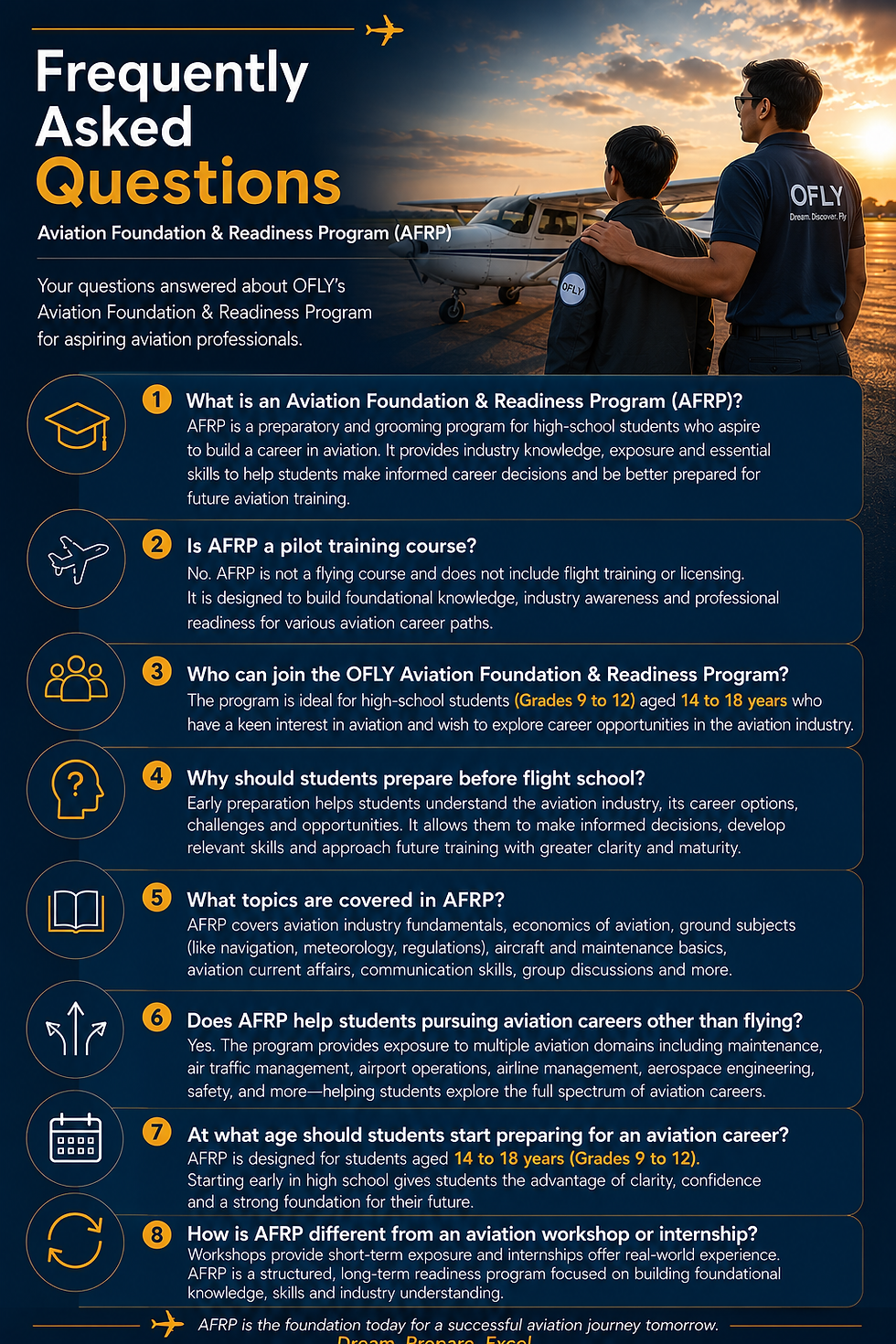
The OFLY Aviation Foundation & Readiness Program (AFRP) has been designed to address this gap. AFRP is a structured grooming program for high-school students who are serious about exploring aviation careers. It is not a flight training program. It is not a licensing course. It is not intended to replace professional aviation education. Instead, AFRP serves as a preparatory experience that equips students with foundational knowledge, industry awareness and professional exposure before they begin formal aviation training pathways. The program helps students transition from aviation enthusiasts into informed future aviation professionals.
What Does AFRP Cover?
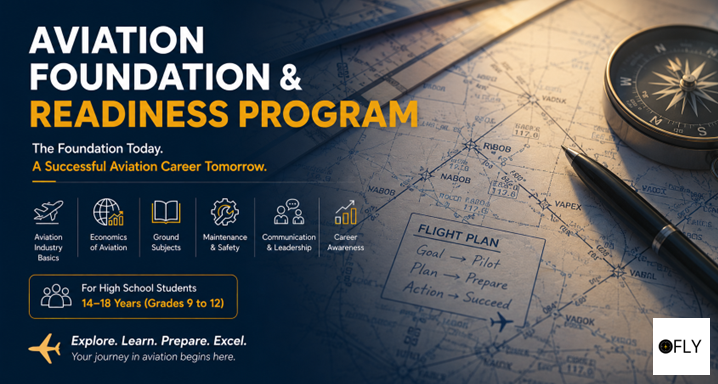
The program adopts a multidimensional approach to aviation education. Students are introduced to the fundamentals of the aviation industry and gain exposure to various sectors that contribute to aviation operations worldwide. Topics include aviation industry fundamentals, airline structures, airport operations and the broader aviation ecosystem. Students also explore aviation economics, gaining insight into how airlines generate revenue, why some airlines succeed while others struggle, and how market conditions influence the industry. Ground subjects commonly encountered during flight training are introduced to help students develop familiarity with aviation terminology and concepts. These include basic aerodynamics, navigation principles, meteorology and aviation regulations.
Beyond technical subjects, AFRP also focuses on developing awareness of current aviation trends, industry developments and emerging opportunities within the aviation sector. Students gain exposure to aircraft systems, aeronautical concepts, maintenance practices and aviation safety culture, helping them appreciate the engineering and operational disciplines that support flight operations. The program additionally incorporates communication exercises, group discussions and analytical activities designed to strengthen professional confidence and structured thinking. The result is a learning experience that covers both the depth and breadth of aviation.
Why Early Exposure Matters?
Students often begin understanding aviation after they have already committed substantial time and resources toward flight training. Early exposure offers a different approach. By learning about aviation before making major educational decisions, students develop greater clarity regarding their interests, strengths and long-term goals. Some students discover a deeper passion for flying. Others discover an interest in engineering, airline management, safety, airport operations or aerospace technology. Regardless of the eventual path chosen, early exposure allows decisions to be made with greater confidence and awareness. In many cases, understanding the industry before entering it becomes one of the most valuable advantages a student can have.
Benefits Beyond Aviation
One of the strengths of a foundation program is that its benefits extend beyond aviation. Students participating in industry-readiness programs often improve their communication skills, presentation abilities, teamwork, problem-solving approach and professional maturity. These competencies remain valuable regardless of whether a student ultimately pursues aviation, engineering, business or another profession. AFRP therefore focuses not only on creating future pilots but also on nurturing capable young individuals who can engage confidently with complex industries and professional environments.
A Message for Parents
Parents frequently invest significant effort in helping their children prepare for future careers.
However, aviation often lacks the preparatory ecosystem available to other professions. Aviation Foundation & Readiness Programs provide an opportunity for students and parents to gain exposure before making substantial commitments. They create an environment where curiosity can be explored responsibly and where career decisions can be supported by knowledge rather than assumptions. For parents, this means greater clarity. For students, it means greater confidence. For both, it means a stronger foundation upon which future aviation aspirations can be built.
Conclusion
The aviation journey does not begin at a flight school. It begins much earlier with curiosity, awareness, preparation and informed exploration. As the aviation industry continues to grow and evolve, aspiring aviation professionals deserve access to structured learning experiences that help them understand the opportunities and responsibilities that lie ahead. Just as future doctors and engineers prepare before entering professional education, aspiring pilots and aviation professionals benefit from building strong foundations before stepping into specialized training. That philosophy forms the core of the OFLY Aviation Foundation & Readiness Program. Because great aviation careers are not built only in the cockpit. They are built through preparation long before the first flight.